

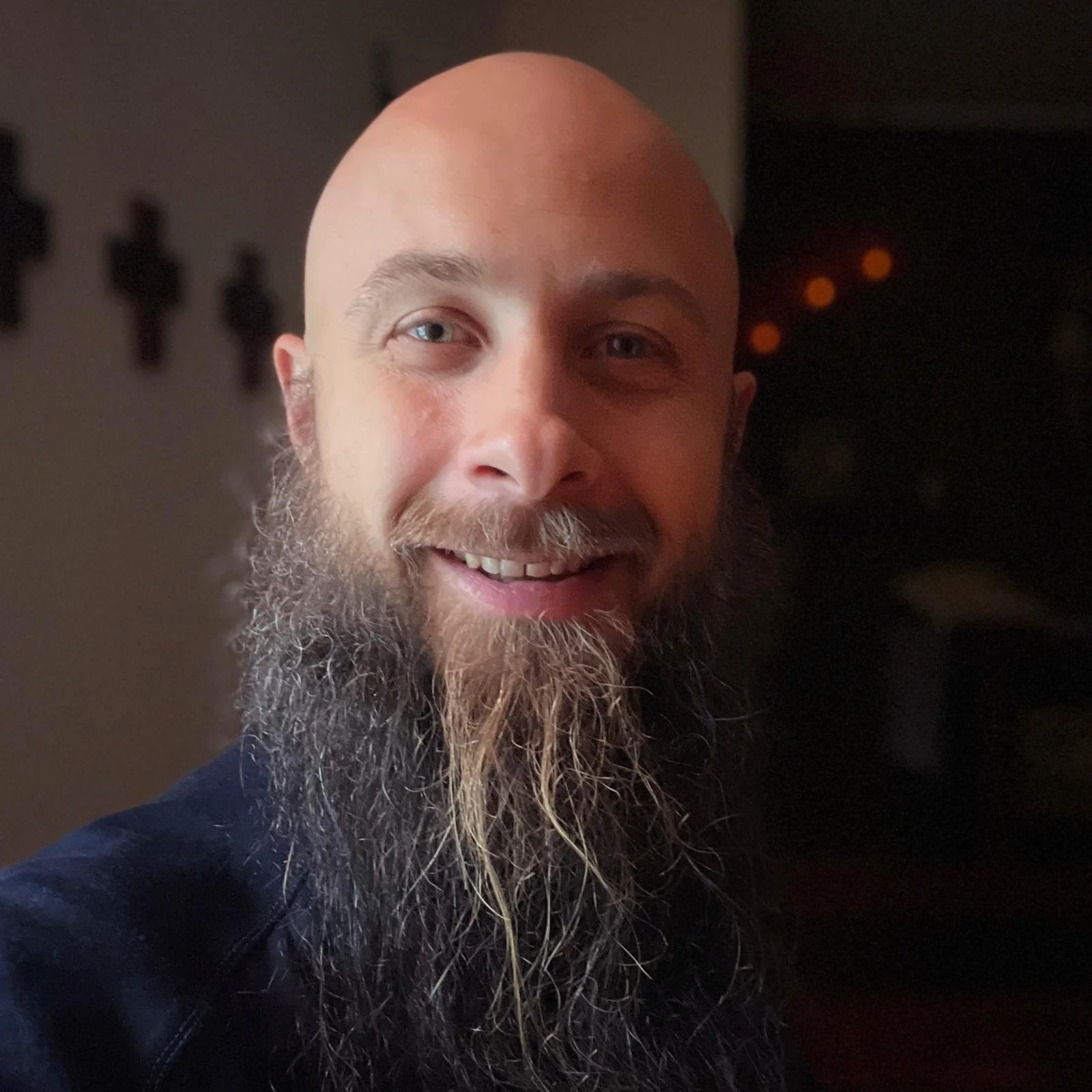
Stanisław Chyla-Smyk
Stanisław Chyla-Smyk is a Polish researcher and cultural professional whose work and life experience bring together human rights, social justice, migration, religious and intercultural relations, social inclusion and spirituality. He holds Master's degrees in Law, Sociology and Theology and is currently pursuing doctoral research in law and theology. He has also pursued interdisciplinary studies in Baltic Studies in Warsaw, Vilnius and Riga. He is the author of academic and popular publications across these fields.
His legal academic interests include migration, human rights and social exclusion. His doctoral research focuses on the right of Polish citizens living abroad and experiencing homelessness to return to their homeland. In theology, his interests focus on early Christian monasticism, particularly the Syriac tradition, as well as the theology of spirituality, ecumenism and interreligious dialogue. His academic work is marked by an interdisciplinary approach, bringing together legal, theological, social and cultural perspectives.
Alongside his academic interest, Stanisław works in the Secretariat for Pastoral Services of the Metropolitan Curia of Warsaw, combining ecclesiastical administration with pastoral ministry. His work involves both the organisational dimension of the Church's pastoral activity and direct engagement with people and communities. He actively participates in Christian-Buddhist dialogue and dialogue with monotheistic religious traditions. In 2019–2020, he coordinated the interreligious “Tents of Abraham” meetings at the church of the Monastic Fraternities of Jerusalem in Warsaw. His experience in interreligious dialogue has included encounters between representatives of different religious traditions, with particular attention to mutual understanding, peaceful coexistence and the search for common ground.
He is also involved in the Blessed Anicetus House, a Capuchin initiative supporting people experiencing homelessness. Through its soup kitchen and community activities, he builds relationships with people experiencing homelessness through the shared creation of handicrafts, combining social inclusion with creative activity. This work reflects his broader interest in social exclusion and in forms of community-building that go beyond institutional assistance and create space for participation, relationship and human dignity.
Before his current academic and ecclesiastical work, Stanisław spent more than 15 years in film, television, advertising and event production, working primarily as a producer, as well as in professional representation of creative talents, including directors, cinematographers and photographers. His professional experience includes working with creative teams, developing and coordinating productions, and representing professionals within the cultural and media industries. This experience shaped his understanding of culture, communication and creative industries, as well as the practical dimensions of collaboration across different professional and cultural environments.
His professional and academic path brings together law and human rights, theology and spirituality, migration and social inclusion, interreligious dialogue, peace and reconciliation, and culture and creative practice. These different areas of experience inform one another, combining academic reflection with pastoral, social and professional engagement with people and communities.